Translate

Showing posts with label drugs. Show all posts

Monday, July 24, 2017

Drugging, drinking, and grasping at straw

drug use, drug, addiction


The real power drugs hold is how they make the user accept magical thinking as real
In the 16th century, Sir Thomas More originated the idiom ‘grasping at straws’.  In actuality, the lawyer, philosopher, and Roman Catholic saint was referring to straw – cattle bedding – and that a drowning man will grasp at anything floating, even straw, to try to stay afloat (paraphrasing). It’s a perfect idiom 483 years later to illuminate how drug use is rationalized by the user and by American society.

Any drug use. Any time.

Every rational man and woman knows the risk of addiction – and death – from using opiates and opioids, for example. There is a well-documented history of addiction and death from this class of drug, dating to it’s first cultivation and use 3,400 years BCE. Why is it still around? Because people will use it. That’s why.
One of the first affects of any mind-altering drug is that it convinces the user it is somehow safe and the consequences are for the other guys. Magical thinking. Like a drowning man believing a single stalk of dried grass in an ocean will buoy him and float him to safety. Once the drug of choice takes over that human, the magical thinking gives way entirely to chemical dependence.
Even when the drug use doesn’t escalate to dependence – or I should say ‘especially’ when it doesn’t – magical thinking trumps intellect every and any time a person is under the influence.
A recovery pioneer and modern-day anti-alcohol trailblazer in the 1970’s, Father Martin, put it succinctly in his Chalk Talk. He said the human mind works best when it operates as Intellect over Emotion, or I/E. Add a mind-altering drug, any of them, and the equation flips to Emotion over Intellect, E/I. That’s a good explanation to why we say and do incredibly stupid stuff while impaired. Your grandmother was right when she said, “That’s not your Rhodes Scholar Grandpa, it’s the booze talking,” right after he declared he was going to shave the cat.

We do dumb stuff, and believe dumb stuff

A lot of recovery professionals, especially in court-ordered programs, see the aftermath of the dumb stuff followed by some more magical thinking. Every single person charged with DUI or other drug-related crime believes in magic. He or she will be sentenced lightly because of their unique situation, or get off on a technicality, or the evidence will be lost because it happened to his ‘guy’ ‘a couple years ago’ and the ‘law is muddy on this issue.’
When a drug tells the same brain it’s poisoning that the stuff isn’t so dumb, we do the dumb stuff. Including rationalizing the use of the drug. Two common examples are the well-funded oversimplifications of marijuana benefits, and the widespread acceptance of alcohol risks.
A medical user of marijuana dislikes the getting stoned part. Just like a medical user of Oxycontin doesn’t care for the high. When a recreational pot smoker wants to rationalize use, however, out comes the Emotion. Drinkers… well, there isn’t medical use and there aren’t any health benefits. It’s all about the buzz.

Send life rafts, not more straw

They’ll trot out the ‘medical benefits’ to support their continued consumption of a drug… when the medical benefits are far from their reason for smoking dope. They’ll roll out the frequently misquoted safety argument in favor of the drug. It sounds like ‘nobody ever died from smoking weed’.  True, nobody overdosed on weed, put the drug is linked to more deaths and health consequences than can be dismissed as coincidence. They’ll spout the long history of smoking herb, embraced by cultures vastly older than ours. Drowning… grasping at any fleck of straw that will keep them afloat.
The scientific evidence on alcohol as a toxin and carcinogen is even more concrete than the evidence of health damage from marijuana use. The drug can change DNA! It begins damaging otherwise healthy tissue from sip one. It’s so poisonous that if the liver had pain nerve endings, none of us would take sip two. Very scientifically sound and highly intellectual. However, even moderate use of the drug alcohol flips the I/E equation to E/I.
The grasping for straw sounds something like: ‘It’s legal’… ‘It relaxes me’… ‘Moderation is safe, the ad said so’… ‘It’s good for the heart’.  That last point has been discredited for more than a decade, by the way.  Rationalizations… buoying a drug-altered brain modified to E/I by the same drug that’s killing it. When someone is drowning, they want to believe in the straw. What if you drift to them a life raft of factsinstead? We have to deliver them back safely to the boat off which they jumped. That boat  – society and social behavior  – may not be Utopia (Sir More’s more famous work), but it beats drowning.

Scott Stevens, is the author of four alcohol books including the December 2016 release, I Can’t See The Forest With All These Damn Trees In The Way: The Health Consequences of Alcohol. Get the new BookLocker title now on Amazon (viewbook.at/prehab), alcohologist.com, and everywhere you buy books.  Click Alcopocalypse for the author’s 2017 Alcohol Awareness Month whitepaper. Image by Kevin Carden, used with permission.

Photo by Dusan Petrovic, used with permission.
<a href="https://www.bloglovin.com/blog/19048105/?claim=ey49gzjdf25">Follow my blog with Bloglovin</a>

Wednesday, April 12, 2017

Addiction recovery’s low, low admission price: Own your $#1+!

(originally posted to Addicted Minds)
Admission. Great noun. It means two related things when it comes to addiction recovery:  A) The right to enter, and B) a voluntary acknowledgment/concession of a fact or truth. There is no A) without B) in our family.
Caveat: Most normies – so called ‘normal’ people – have no clue how great we have it so they don’t bother with admission. Either definition.
Drug of choice doesn’t matter. Pills, weed, alcohol, meth, fill-in-the-blank. While active with a drug of choice addicts concede very few facts about their own condition. The reason, the drug alters the function of the same organ responsible for the voluntary acknowledgment of fact. The result, as expected, is the continued use of the same drug of choice until death. Sometimes it is the drug actually causing the death. Other times it just hastens the journey. Addiction is that way when it comes to choices. Addiction means lack of choices and you have exactly two: Admission. Or shorter life expectancy.
Owning your addiction begins to slam the door on the less desirable of the two choices.

Slam the door

You begin to admit other things on the path back to society once you’ve crossed addiction’s Rubicon by admitting your problem is your problem. “I did really crummy things when I drank. I’m sorry.” “I stole from you to get more because I am addicted to more. Let me make it right.”
Sounds quite 12-steppish (ninth, to be precise), so how about a history lesson. Stepping back to admit so you can move forward is much older. There’s a Latin phrase, ‘mea culpa.’ The literal translation from the Latin is ‘through my own fault.’ Yes, the Roman Catholics use it in their Mass, but don’t get your shorts in a knot over the AA connotation or the religious affiliation: Geoffrey Chaucer used it in Troilus and Criseydea poem, in 1374.  Six-hundred-plus years later, we just say, ‘My bad.’
In doing so an addict isn’t saying he or she is a bad person. Just flawed. (Guess what? Normies are flawed, too.) It’s a liberating moment. No longer does an addict blame his buddies or a crummy childhood or her despotic husband. He or she takes responsibility for his addiction being nobody else’s. We own our $#1+. We move on from that point. We become people in (or aspiring to) long-term recovery.
Own your $#1+. Admit it. Your admission gains admission to the prestigious and graciously welcoming recovery family. It beats the other choice. And you have only two.

Addicted Minds’ Editor-in-Chief, Scott Stevens, is the author of four alcohol books including the December 2016 release, I Can’t See The Forest With All These Damn Trees In The Way: The Health Consequences of Alcohol. Get the new BookLocker title now on Amazon (viewbook.at/prehab), alcohologist.com, and everywhere you buy books. Image by Ivan Zamurovic, used with permission.


Friday, July 8, 2016

How others' alcohol use became your business: The Toxin-omics

alcohol policy, drug policy, health, public health, economy

Drinking is 'The American Way,' 'How We Roll,' 'Harmless Fun,' or just 'None of Your Damn Business.' Just ask a drinker. He or she doesn't even need to have the disease of alcoholism: You attempt to get between a person and the beverage of choice and you'll hear defense. The defense is offensive when you know the economics of the toxin and drug alcohol.
The economic impact of drinking – casual drinking and alcoholic use – tallies an eye-popping $250 billion every single year in the U.S. By way of comparison, smoking costs the economy $173 billion… all other drugs combined cost the economy $130 billion. A 2011 study in the Journal of the National Cancer Institute determined the cost of all cancer care in the U.S. totaled $124.5 billion in 2010 … half as large as the alcohol toll. How big is the we-don't-have-a-problem alcohol problem, by the numbers?
  • That's enough to buy a 48 inch HDTV for every man, woman and child in the U.S. And an X-Box. Every year.
  • Two-hundred-fifty billion dollars is the same as the annual expenditure on fashion and apparel in the entire U.S.
  • The Treasury in 2008 bailed out the banks with a $250 billion “investment” that created critical echoing still heard in the 2016 Presidential campaign and brought hundreds of 99 Percenters camping in Wall Street. That was just a one year expense.
  • For the ubersmart Keynesian economists out there, $250 billion is a NEGATIVE GDP (gross domestic product) value of $74 billion. (For those of us less-smart: Alcohol shrinks the economy the way it shrinks libido.)
  • For the 216 world economies tracked in the CIA World Factbook, $250 billion is bigger than the 40th largest economy on the planet, and bigger than the output of the bottom one-third of countries COMBINED. 
The costs are in healthcare, lost productivity, legal and corrections costs. Alcoholism is part of the total, but $250 billion is driven by all drinking, even social or moderate use. The CDC readily admits the $250 billion is on the low side, too. The researchers believe that the study still underestimates the cost of excessive drinking because information on alcohol is often underreported or unavailable, and the study did not include other costs, such as pain and suffering due to alcohol-related injuries and diseases.

Alcohol revenue does not cover alcohol economic damage
The monetary consequences are something everyone shares: Drinkers and non-drinkers alike. The numbers get complicated, because the drug Americans enjoy and defend so vigorously, also costs the most in health and hard dollars. Each drink consumed has a median cost of $2.05 in economic harm (lost productivity, health care costs, property damage and criminal justice system expenses). That's according to the Centers for Disease Control and Prevention (CDC). So the drinker pays for that in alcohol tax, right? No. The median paid in tax per drink is less than a nickel a drink. The Tax Policy Center estimates that state and local taxes on alcoholic beverages bring in about $6 billion in revenue nationwide. The overall economic benefit from the manufacture and distribution is less than a quarter per drink.
Industry watchdog, Alcohol Justice, suggests closing the gap between tax revenue and the economic damage, which may also reduce use. According to Alcohol Justice's Charge for Harm Campaign, "Big Alcohol produces, sells, and promotes products that cause harm and incur costs - to both government and its citizens. Appropriately taxing alcohol at state and federal levels will help reduce related harm and provide needed funds. We support state and federal increases in alcohol taxes and fees."
Even if drinkers bore the full $2.05, everyone else still pays in lost productivity. Show up late, never, hungover or just without your A-game and someone has to step in or step up. It doesn't always happen that way. Which costs the company. So the company charges more for its goods or services. Lost productivity, according to the National Institutes of Health (NIH) is more than 70 percent of the $250 billion annual cost of alcohol use in the United States. Every shopper pays… no matter if we shop Walmart or Macy's.
This is the part of the revenue formula pro-alcohol forces leave out of the dialogue when pushing for more beverage licenses, longer hours of service, and absurd ideas like selling alcohol at college sports venues. With greater access to alcohol, the revenue does go up in a bar, store, or restaurant. But so does the economic damage. And never the twain shall meet.
Need a hospital bed? Wait. And pay more.
Here's another way to look at the economic harm. There is an alcohol-related hospital admission every 30 seconds and, according to the National Institute on Alcohol Abuse and Alcoholism (NIAAA) 20-40 percent of general use (non-specialty) hospital beds are used to tend to alcohol-related complications. Heroin addicts aren't breaking the healthcare system. Aging Baby Boomers aren't pushing it past capacity. Alcohol use is drowning it.
Health care costs related to alcohol use are not limited to the drinker. There are unintended – and sober – victims in traffic crashes you've no doubt heard about from the impaired driving activists, Mothers Against Drunk Driving (MADD). However, children of alcoholics who are admitted to the hospital average 62 percent more hospital days and 29 percent longer stays according to the Children of Alcoholics Foundation.
Nested inside of every major cause of death in the U.S. is the fact that alcohol use is a contributing factor to each of those causes of death or hospitalization. Alcohol is a carcinogen, for example. It is the second-leading cause of oral cancers and is the only dietary connection ever made to an increased risk of breast cancer. The Agency for Healthcare Research and Quality (AHRQ) estimated the price of cancer care for one year of life increased to $207,000 in 2013.
Heart disease, not cirrhosis, is the leading killer related to drinking. Annually, about one in every six U.S. healthcare dollars is spent on cardiovascular disease. By 2030, annual direct medical costs associated with cardiovascular diseases are projected to rise to more than $818 billion, while lost productivity costs could exceed $275 billion. What is the preventative measure hiding in plain sight? Stopping drinking. About 1 in 3 adults—or approximately 86 million people—have at least one type of cardiovascular disease, which means many more Americans could die from what is often preventable through lifestyle changes or managing medical conditions. There are 1.5 million heart attacks and strokes in the U.S. annually. One in five strokes is alcohol-related. One dollar spent on alcohol education (e.g. abstinence) saves $4 in healthcare costs down the road. (Plus $7 in criminal justice system costs for good measure.)
Bottom line: We ALL pay
The healtcare cost equation under mandated insurance means part of every insurance policy premium is gobbled up to care for alcohol-related problems. An insured person doesn't have an account from which he or she dips. Insurance premiums are pooled. You can be a non-drinker… your own premium will be lower because of your relationship with alcohol… but your premium will still reflect the experience of the insurance pool. With insurance mandatory, and 67 to 70 percent of adults using alcohol in the past year, there is a majority of your insurance dollar used to mitigate the expense of drinking.
Binge drinking alone – four or more drinks per occasion for a woman and five or more drinks for a man – accounts for more than 75 percent of costs related to excessive alcohol use in all states, just under $171 billion. Binge drinking is reported by about 18 percent of adults in America. (Wager that the self-reported binge drinking number is MUCH higher, people aren't typically honest about their answer to the non-of-your-damn-business question.) According to the CDC. binge drinkers and their families paid less than half of the costs associated with high alcohol use (41.5 percent) while federal, state and local governments paid about 42 percent, or more than $94 billion, of the costs.
The government doesn't have a separate checkbook funded by drinkers or beverage companies to pay for this: It uses your checkbook.
Visit www.alcohologist.com for more on the health and economic costs of drinking a toxin and known carcinogen. And order The A-Files: Alcohol A-Z for what alcohol does TO you, not FOR you. I Can't See The Forest With All These Damn Trees In The Way is now available in paperback.

Saturday, July 2, 2016

Selling care: Patient brokering in addiction treatment

health, healthcare, treatment, drug addiction

Ambulance-chasing. Society generally looks on with disgust at the attorney who markets directly to the accident victim in the hours after the ink on the police blotter dries. The practice isn't illegal, but it brings up the subject of ethics. A similar practice has smoldered silently in the addiction care business for the last decade and will be leading to more scrutiny – and crackdown – over the second half of 2016.
Treatment centers provide a service (detox, intensive outpatient, inpatient, partial hospitalization, or some combination of elements) for a fee, which is charged to the client or the client's insurer. It's America. Lawyers charge a fee in a time of need. Mutual fund companies charge a fee to manage the retirement money upon which you'll develop a need. Lawyers are regulated. Fund companies and their sales reps are regulated and supervised. The practice is largely unregulated in the treatment industry.
The ambulance chaser in the addiction care business solicits business in 12-step meetings and detox facilities and even emergency rooms. There are reputable recovery coaches and other addiction paraprofessionals in the service of those struggling with substance abuse who also attend to those venues and offer suggestions. When they are paid by a treatment entity to deliver those struggling heads to the facility's beds is the point in which the practice becomes predatory.
Take for example, Alcoholic Joe. Joe turns up in the emergency department, unconscious due to acute intoxication. (e.g., he's beyond drunk) A responsive ER staff will inquire about what he's had, how much, and how frequently. Maybe even a social worker or staff associate will address the possibility that Joe has a substance use disorder and suggest courses of action beyond the hospital's capability. Other resources may be given to Joe, if he inquires. He takes it to heart (or his wife does) and Joe goes to a 12-step meeting.
So far, so good. When Joe bumps into a counselor, a self-styled recovery guru or a fellow at the meeting, the conversation sometimes turns to treatment. If the person steering the conversation toward a facility is getting paid $1,000 or $5,000 a head to steer Joe toward that facility – and never discloses he or she is on the dole – is where the industry is getting its latest black eye.
It's not unfamiliar territory for the healthcare biz. Rewind the tape back to the early 90's when physicians were accepting elaborate junkets from pharmaceutical companies and medical device makers. The public bristled when the kickback exposed that the patient might not be getting the best medication or device for his condition, just possibly the medication or device offered by the company with the sweetest “conference” destination. In the early 2000's a similar practice in the mutual fund business was discontinued when fund companies were found to have influence over brokers who might not be offering the most suitable investment for the client, just the funds that landed on the “preferred list” because of the extras offered the broker or brokerage firm.
As the opioid epidemic continues to grow within the shadow of the alcohol pandemic, more treatment centers are opening. Which can only be considered a good thing if they are treating the patient and not the one who provided the patient. As start-up facilities – and some established ones – struggle to keep cashflow manageable, a pay-per-client (heads-in-beds) can be an attractive alternative to shelling out for a marketer's salary and benefits. A captive marketer is going to work for one facility or group of facilities. He or she may not have a component of their compensation based on the census of the facility (e.g. percentage of beds filled at a given time). But they are, in theory, still driven by getting the right fit between the client and the facility. Many even network with other centers' marketing staff and refer business to the right fit based on the cost, insurance and most importantly the client's needs. When a consultant makes a referral without accountability to the facility or for the outcome of the treatment for that client, but for what it appears to be the financial gain of a $5,000 payday over a $1,000 payday, the treatment industry's self-policing has a weakness.
There is no inference that every per-client marketer or treatment facility that employs the tactic is sketchy. As with any enterprise, there are scrupulous and unscrupulous sales people. This industry is no exception even though it is commonly referred to as a helping profession which comes in contact with families and clients during a real and human and emotionally charged crisis.
In the early part of this decade, healthcare officials as well as federal agencies have had the practice show up on their radars. In some cases, the fit between the client and facility or program was so poor, litigation ensued. In extreme cases, people have relapsed and/or died while in the care of a program. Not that the relapse is uncommon with the disease of addiction to alcohol or other drugs… it's not a welcome outcome in or shortly after treatment.
For now, the status quo is under greatest scrutiny in California and Florida, two treatment industry hotbeds. However the status quo remains as a practice that is not illegal – like ambulance chasing – just potentially unethical until greater oversight and guidance is provided. For the time being, it pays to ask a question if and how a person is being compensated for making a recommendation of one facility over another.
The entire 26 episode HD The A-Files: Alcohol A-Z series is available on disc, along with fact sheets, for helping professions. Visit alcohologist.com for a replay of CBS Sports' Power Up Your Health featuring Scott Stevens.  Another interview is on Alcohol Awareness Syndicated radio program Savvy Central Radio did this interview, too. Lucy Pireel's "All That's Written" included a feature called "When alcohol doesn't work for you anymore."  Details on the third literary award for Every Silver Lining Has a Cloud and the first for Adding Fire to the Fuel also can be found on www.alcohologist.com. Download the FREE Alcohology app in the Google PlayStore today. Stevens also is the public relations officer with AddictedMinds.com 

Wednesday, March 4, 2015

Keeping perspective: A heroin epidemic and an alcohol pandemic


Heroin deaths are on a sharp rise. The 8,260 deaths in 2013 were a 39 percent jump from year before, and nearly double the 4,400 seen in 2011 according to data from the U.S. Centers for Disease Control and Prevention (CDC). Every single one of those deaths is a tragedy... a personal one for the families, and a senseless one for communities struggling for answers. The problem has been called an epidemic by medical professionals, addiction specialists, law enforcement and politicians.

The 8,620 heroin deaths make an epidemic. The other drug killing 89,000 Americans every year equates to a pandemic. Alcohol is that drug. The third-leading cause of preventable illness and death in the U.S., and the world.

'But drinking is legal and safe in moderation,' is the public perception. The $226 billion annual pricetag shouldered by the U.S. economy is the public reality. That is the cost of alcohol misuse when it is examined by lost productivity, healthcare costs, law enforcement and property damage.

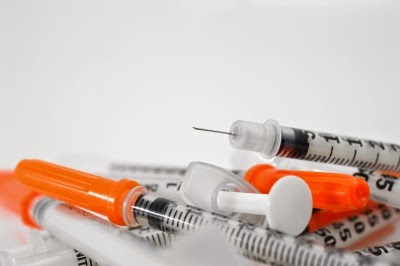
Americans will fight a heroin epidemic because it beats facing the alcohol pandemic. Why look at what, when and how much alcohol is consumed? It's easier to hate the heroin we don't understand, than to condemn the drug in the refrigerator. We'll manhunt and condemn the killer of 8,200 while the murderer of 89,000 walks free. One is sold by sociopathic thugs, the other is sold by Walmart, Walgreens, Kroger, Pick 'n Save and insert-your-favorite-hometown-store here. Towns will shred the streets to eradicate dope, its users and dealers if we find a hypodermic on the school playground, but we'll hold the beer-soaked church festival on the same playground.

Just like the sharp rise in heroin deaths can and should get swift and meaningful attention especially for its toll on teens, the larger drug-related death toll cannot be ignored.
In one year, there are slightly more than 84,000 visits to emergency rooms in the U.S. due to heroin. That's about 1 every seven minutes. There is an alcohol-related hospital admission every 30 seconds and 20-40 percent of general use (non-specialty) hospital beds are used to tend to alcohol-related complications. Heroin addicts aren't breaking the healthcare system... aging Baby Boomers aren't pushing it past capacity: Alcohol use is.
Last year, 80 percent of heroin deaths were caused directly by the drug in combination with alcohol or other drugs. About 10 percent were caused directly by heroin alone. The remaining 10 percent were caused by the drug together with suicide, accidents, homicides or medical disorders.

Perhaps it is the sudden vicious way heroin always kills, compared only to the equally senseless and sudden way alcohol only sometimes claims a life on the highway. One in eight alcohol-related deaths is from a car wreck. One in 40 is from alcohol poisoning (as noted in a related overdose article). The majority of alcohol-related deaths are far from the instant the alcohol is used. Most alcohol-related death comes in the form of homicide, accidental injury, drug interactions, heart disease (a related article demonstrates alcohol doesn't prevent it, it causes it), stroke (1 in 5 is alcohol-related), cirrhosis and more than 60 other diseases... including cancer. The “C-word.” Alcohol IS a known carcinogen. Heroin might be as well, if its users lived long enough or in numbers high enough to constitute a study.

In either case, doctors have stated that no amount of either substance is safe. (See No Amount is Safe) People tend to take that to heart when concerned with heroin since most of the population will never see the substance, but they'll ignore the warning when it comes to the beverage as seen on TV ads or enjoyed with meals.

The reality check here is not that alcohol should be banned, rerunning the failed experiment of prohibition. It's that we need to look at society's favorite drug as a sneakier murderer more fatal than the killer drug, heroin. If there's an epidemic, there's also a pandemic. What causes problems, is one.
(review full article)

Visit alcohologist.com for a replay of CBS Sports' Power Up Your Health featuring Scott Stevens.  Host Ed Forteau led a discussion on the health risks and myths of health benefits of drinking.  Lucy Pireel's "All That's Written" included a feature on Every Silver Lining Has a Cloud called "When alcohol doesn't work for you anymore."  Details on the third literary award for Every Silver Lining Has a Cloud also can be found on www.alcohologist.com, plus an interview with Christoph Fisher Books.  Mr. Fisher is an acclaimed international author from the UK, among his works is the Alzheimer's book "Time to Let Go."  Download the FREE Alcohology app in the Google PlayStore today.

Sunday, December 21, 2014

The Sobriety :60 #20 - Alcohol and Rx, OTC drugs don't mix because alcohol IS a drug


Cold pills, Tylenol, heart meds, even herbal remedies can go very south when combined with alcohol. Learn more in this episode on youtube or read the transcript.

Visit alcohologist.com for a replay of the Dr. Alan Simberg's show, Life Changing Insights, featuring Scott Stevens.  Dr. Simberg led a discussion on the health risks and myths of health benefits of drinking.  Lucy Pireel's "All That's Written" included a feature on Every Silver Lining Has a Cloud called "When alcohol doesn't work for you anymore."  Details on the third literary award for Every Silver Lining Has a Cloud also can be found on www.alcohologist.com, plus an interview with Christoph Fisher Books.  Mr. Fisher is an acclaimed international author from the UK, among his works is the Alzheimer's book "Time to Let Go." 

Thursday, October 23, 2014

Red Ribbon Week t-shirts now on sale

All new design.  The price of $15 includes USPS PRIORITY SHIPPING. $25 for TWO to the same address. White Fruit of the Loom 100 percent cotton t-shirt with "Alcohol IS a drug" logo. Adult sizes S-3X. Order athttp://www.alcohologist.com/how-to-order.php

Visit alcohologist.com for a replay of the Bringing Inspiration To Earth show feature with Scott Stevens. Lucy Pireel's "All That's Written" included a feature on Every Silver Lining Has a Cloud called "When alcohol doesn't work for you anymore."  Details on the third literary award for Every Silver Lining Has a Cloud also can be found on www.alcohologist.com, plus an interview with Scott Stevens on Health Media Now and one at Christoph Fisher Books.  Mr. Fisher is an acclaimed international author from the UK, among his works is the Alzheimer's book "Time to Let Go."  

Saturday, May 10, 2014

A Mother's Day review of a new documentary on recovering moms

My recent appearance at the REEL Recovery Film Festival in San Francisco coincided with the world premier of the documentary "On Life's Terms: Mothers in Recovery."  I met filmmaker Sheila Ganz afterward, and have nothing but the greatest admiration for the work she has done.  This is a gripping one-hour that's a MUST SEE film on women facing tough odds with an eye on reuniting their families after facing their addictions.
Sheila follows five new moms facing legal challenges and the removal of their children in a criminal justice system too often known for heavy-handedness and mistreatment, rather than compassion and treatment.  The film follows the mothers through gut-wrenching stories, tears, reluctant acceptance, then growth into their "aha" moments... through the years following their program commitment and reuniting with their children.  There's also the draw of old relationships and the pull of old ways of thinking and resentments, even months and years after the moms get clean and sober.  Those moments I believe were intentionally left in the final cut to prove that all of us are recovering, not cured.  I covered my eyes, telling the screen, "DON'T DO IT."
And all this is VERY well done. 
I admit to not having a whole lot of experience with moms and recovery.  This opened my eyes.  I am glad there are resources but never realized until the film just how scarce they are.  There are only 150 mom-oriented programs in the whole country?? When the outcomes are so potentially powerful??
I have strong feelings about women risking the unborn and believe they MUST be accountable.  This film showed they can be without incarceration. Corrections and a punitive justice system do more harm than their (mis)treatment programs claim.  This film shows the positives of diverting young families away from the hostility of a lockup,  It works for the community as well as the offender and MOST IMPORTANTLY the kids.  
We all have a stake in the outcomes for mother and child.  This brilliantly executed documentary shows how it works when restorative justice trumps punitive justice ... and left me inspired to learn more and DO MORE.
You can visit www.onlifesterms.org and follow the film and a remarkable filmmaker on facebook at https://www.facebook.com/onlifestermsfilm.
www.alcohologist.com
Scroll down for the replay of the April 13 Sound Health Options show feature with Scott Stevens. Lucy Pireel's "All That's Written" included a feature on Every Silver Lining Has a Cloud called "When alcohol doesn't work for you anymore."  Details on the third literary award for Every Silver Lining Has a Cloud can be found on www.alcohologist.com, plus an interview with Scott Stevens on Health Media Now and one at Christoph Fisher Books.  Mr. Fisher is an acclaimed international author from the UK, among his works is the Alzheimer's book "Time to Let Go."  

Saturday, October 26, 2013

SATURDAY REWIND: Teen drinking, drug use best thwarted by parents, not red ribbons

Red Ribbon Week -- the annual substance abuse prevention campaign Oct. 23-31 -- produces some of the best and most consistent messaging about alcohol and other drugs and the dangers they present to youth.  A December 2012 article from the alcohol research news archive notes that school and community campaigns are visible and effective, but the best resources in substance abuse prevention are Mom and Dad.


Parental involvement does more to discourage underage drinking than the school environment can, according to research released December 4 by three universities.

Specifically, the researchers looked at how “family social capital” and “school social capital” changed the chances for and/or frequency of alcohol use by children. Family social capital can be described as the bonds between parents and children, such as trust, open lines of communication and active engagement in a child’s life. School social capital captures a school’s ability to serve as a positive environment for learning, including measures such as student involvement in extracurricular activities, teacher morale and the ability of teachers to address the needs of individual students. Parenting is a better block to underage drinking than the schools, according to the North Carolina State University news release on the study.

"To be clear, school programs that address alcohol and marijuana use are definitely valuable, but the bonds parents form with their children are more important. Ideally, we can have both," says Dr. Toby Parcel, a professor of sociology at NC State and co-author of a paper on the work.

The researchers looked at data from a nationally representative sample that collected information from more than 10,000 students, as well as their parents, teachers and school administrators. The research, to be included in the quarterly Journal of Drug Issues, evaluated marijuana use and alcohol use separately.

“Parents play an important role in shaping the decisions their children make when it comes to alcohol and marijuana,” says Parcel. In both cases, researchers at NCSU (in conjunction with Brigham Young University and Penn State University) found that students with high levels of family social capital and low levels of school social capital were less likely to have used marijuana or alcohol – or to have used those substances less frequently – than students with high levels of school social capital but low family social capital.

More than 10 million American youth under the age of 21 drink alcohol, and more than a million of them are binge drinkers, according to the American Medical Association. One in four teens in the United States have consumed alcohol in the past 30 days. "Underage drinking should not be a normal part of growing up. It's a serious and persistent public health problem that puts our young people and our communities in danger," said U.S. Substance Abuse and Mental Health Services Administration (SAMHSA) Administrator Pamela S. Hyde in a related November 26 examiner.com story. "Even though drinking is often glamorized, the truth is that underage drinking can lead to poor academic performance, sexual assault, injury, and even death." Teen drinking also can lead to alcohol abuse as an adult or the disease of alcoholism.
-- from examiner.com (see full article)
www.alcohologist.com


Details on the third literary award for Every Silver Lining Has a Cloud, plus the new radio interview replay is available at alcohologist.com... and please read the new interview with Scott Stevens at Christoph Fisher Books.  It's one of his Top Ten for 2013.  Mr. Fisher is an acclaimed international historical fiction novelist from the UK.