Translate

Showing posts with label death. Show all posts

Wednesday, March 4, 2015

Keeping perspective: A heroin epidemic and an alcohol pandemic


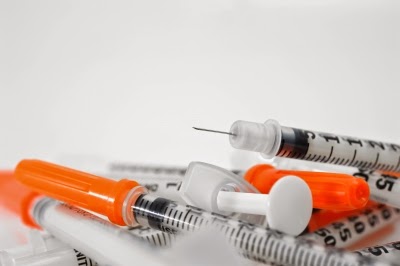
Heroin deaths are on a sharp rise. The 8,260 deaths in 2013 were a 39 percent jump from year before, and nearly double the 4,400 seen in 2011 according to data from the U.S. Centers for Disease Control and Prevention (CDC). Every single one of those deaths is a tragedy... a personal one for the families, and a senseless one for communities struggling for answers. The problem has been called an epidemic by medical professionals, addiction specialists, law enforcement and politicians.

The 8,620 heroin deaths make an epidemic. The other drug killing 89,000 Americans every year equates to a pandemic. Alcohol is that drug. The third-leading cause of preventable illness and death in the U.S., and the world.

'But drinking is legal and safe in moderation,' is the public perception. The $226 billion annual pricetag shouldered by the U.S. economy is the public reality. That is the cost of alcohol misuse when it is examined by lost productivity, healthcare costs, law enforcement and property damage.

Americans will fight a heroin epidemic because it beats facing the alcohol pandemic. Why look at what, when and how much alcohol is consumed? It's easier to hate the heroin we don't understand, than to condemn the drug in the refrigerator. We'll manhunt and condemn the killer of 8,200 while the murderer of 89,000 walks free. One is sold by sociopathic thugs, the other is sold by Walmart, Walgreens, Kroger, Pick 'n Save and insert-your-favorite-hometown-store here. Towns will shred the streets to eradicate dope, its users and dealers if we find a hypodermic on the school playground, but we'll hold the beer-soaked church festival on the same playground.

Just like the sharp rise in heroin deaths can and should get swift and meaningful attention especially for its toll on teens, the larger drug-related death toll cannot be ignored.
In one year, there are slightly more than 84,000 visits to emergency rooms in the U.S. due to heroin. That's about 1 every seven minutes. There is an alcohol-related hospital admission every 30 seconds and 20-40 percent of general use (non-specialty) hospital beds are used to tend to alcohol-related complications. Heroin addicts aren't breaking the healthcare system... aging Baby Boomers aren't pushing it past capacity: Alcohol use is.
Last year, 80 percent of heroin deaths were caused directly by the drug in combination with alcohol or other drugs. About 10 percent were caused directly by heroin alone. The remaining 10 percent were caused by the drug together with suicide, accidents, homicides or medical disorders.

Perhaps it is the sudden vicious way heroin always kills, compared only to the equally senseless and sudden way alcohol only sometimes claims a life on the highway. One in eight alcohol-related deaths is from a car wreck. One in 40 is from alcohol poisoning (as noted in a related overdose article). The majority of alcohol-related deaths are far from the instant the alcohol is used. Most alcohol-related death comes in the form of homicide, accidental injury, drug interactions, heart disease (a related article demonstrates alcohol doesn't prevent it, it causes it), stroke (1 in 5 is alcohol-related), cirrhosis and more than 60 other diseases... including cancer. The “C-word.” Alcohol IS a known carcinogen. Heroin might be as well, if its users lived long enough or in numbers high enough to constitute a study.

In either case, doctors have stated that no amount of either substance is safe. (See No Amount is Safe) People tend to take that to heart when concerned with heroin since most of the population will never see the substance, but they'll ignore the warning when it comes to the beverage as seen on TV ads or enjoyed with meals.

The reality check here is not that alcohol should be banned, rerunning the failed experiment of prohibition. It's that we need to look at society's favorite drug as a sneakier murderer more fatal than the killer drug, heroin. If there's an epidemic, there's also a pandemic. What causes problems, is one.
(review full article)

Visit alcohologist.com for a replay of CBS Sports' Power Up Your Health featuring Scott Stevens.  Host Ed Forteau led a discussion on the health risks and myths of health benefits of drinking.  Lucy Pireel's "All That's Written" included a feature on Every Silver Lining Has a Cloud called "When alcohol doesn't work for you anymore."  Details on the third literary award for Every Silver Lining Has a Cloud also can be found on www.alcohologist.com, plus an interview with Christoph Fisher Books.  Mr. Fisher is an acclaimed international author from the UK, among his works is the Alzheimer's book "Time to Let Go."  Download the FREE Alcohology app in the Google PlayStore today.

Wednesday, February 25, 2015

Behind enemy (head)lines: The real point of drug-hazards study is NOT pot safety


The argument over which is safer misses the point.
scottchan, FreeDigitalPhotos, used with permission

An accurate headline for the widely circulated Feb. 23 Scientific Reports study showing comparative risks of alcohol, tobacco, cannabis and other illicit drugs would read 'Yes, alcohol really is that dangerous.' However, the material of the study has instead become cannon fodder for those who wish to see marijuana legalized. Which wasn't the point of the effort.
The other drugs involved in the study were heroin, cocaine, tobacco, ecstasy, and methamphetamine. Only the danger of the substance was used to determine their findings. Researchers did not take any other factors into account. “Much of the harm from drug use is not inherently related to consumption, but is heavily influenced by the environmental conditions of drug use,” the researchers stated in their study.
The narrative of the study aims to give a relative probability of dying from ANY of the drugs. According to the book, Every Silver Lining Has a Cloud, quantitatively, alcohol is the third leading cause of preventable death and illness in the United States, claiming at least 89,000 deaths a year, and by the author's estimate, the number is significantly underexaggerated. Qualitatively, it causes more than 60 diseases aside from the disease of alcoholism. It creates complications for more than 200 different medical conditions from osteoarthritis to the common cold.
The new study does not reveal new information about how lethal the toxin and known carcinogen, alcohol, can be to otherwise healthy human tissue. Alcohol – and its metabolite, acetaldehyde (30 times more volatile than alcohol) – is the most dangerous drug, illicit or otherwise. The study merely announces the fact that the dangers of alcohol are exponentially higher than the dangers of marijuana, not that marijuana is safe, as pro-cannabis forces would claim.
A rattlesnake's venom is less toxic than an Inland Taipan's. So, which would you like to bite you today? It may be a good thing that meth users aren't as well financed, otherwise we would see a headline from the tweakers that 'Meth is safer than alcohol' as a conclusion to the study.
When the dialogue has digressed to the point of comparing one drug's safety to another, the conversation is akin to choosing on which side of the Titanic to place a deck chair. Where the research falls short of being a true call to expand legalization of marijuana, it should instead serve as a warning that the status-quo of alcohol policy may need to be addressed.
Pro-cannabis and pro-alcohol forces both miss the forest by bumping into trees like this study...  another cliche, but sometimes the cliches get it right. When you take the emotion out of the dialogue and stick to evidence-based -- not observational -- studies, the overwhelming preoponderance of research, including the new study, shows neither drug extends life or improves health.

Visit alcohologist.com for a replay of CBS Sports' Power Up Your Health featuring Scott Stevens.  Host Ed Forteau led a discussion on the health risks and myths of health benefits of drinking.  Lucy Pireel's "All That's Written" included a feature on Every Silver Lining Has a Cloud called "When alcohol doesn't work for you anymore."  Details on the third literary award for Every Silver Lining Has a Cloud also can be found on www.alcohologist.com, plus an interview with Christoph Fisher Books.  Mr. Fisher is an acclaimed international author from the UK, among his works is the Alzheimer's book "Time to Let Go."  Download the FREE Alcohology app in the Google PlayStore today.

Monday, May 12, 2014

In the time it takes to read this article, 15 people will die an alcohol-related death

In the two and a half minutes it takes to read this story, fifteen people will die an alcohol-related death. A death toll surpassing violence, TB and AIDS combined hangs on what many view as a benign substance found in nearly every grocery store and ballpark. Alcohol, the world's third-leading cause of preventable injury and death, claims 3.3 million lives a year according to a May 12 report by the World Health Organization (WHO).

Including intoxicated driving, alcohol-induced violence and a causal relationship with more than 60 diseases and disorders, alcohol causes one in 20 deaths globally every year, says the WHO. "This actually translates into one death every 10 seconds," says Shekhar Saxena, who comment on the WHO's 2014 Global Status Report on Alcohol and Health. Intoxicated motorists are responsible for one in seven of those deaths.
Alcohol caused the deaths of 7.6 percent of men and 4 percent of women who died in 2012, the year of the study data.

More people in countries where alcohol consumption has traditionally been low, like China and India, are also increasingly taking up the habit as their wealth increases, according to the WHO report. "More needs to be done to protect populations from the negative health consequences of alcohol consumption," Oleg Chestnov of the WHO's Noncommunicable Diseases and Mental Health unit said in a statement.

The popular misconception is that alcohol causes only the disease of alcoholism, according to alcoholism recovery book Every Silver Lining Has a Cloud. However, drinking is linked to more than 200 health conditions, including liver cirrhosis and some cancers. "Many of the diseases don't appear until years after the person stops drinking. The damage is done early and cumulatively.”

A separate 2013 oncology report (see related article) went so far as to say, “When it comes to cancer, no amount of alcohol is safe.” Alcohol abuse also makes people more prone to contracting or worsening infectious diseases like tuberculosis, HIV and pneumonia, the WHO found.

Most deaths attributed to alcohol, around a third, are caused by associated diabetes and cardiovascular diseases. This despite observational claims that a moderate amount of red wine has cardiovascular health benefits. Researcher call those claims, “wishful thinking,” and say they don't hold up in evidence-based studies (see related examiner.com article).

The world's wealthiest nations – in Europe and the Americas – are boozier than people in poorer countries, but rising wealth in emerging economies is also driving up alcohol consumption. Eastern Europe and Russia are home to the world's biggest drinkers. Russian men who drink consumed an average of 32 liters (8.5 gallons) of pure alcohol a year, according to 2010 statistics, followed by other Western countries including Europe, Canada, the United States, Australia and South Africa.

On average, every person above the age of 15 worldwide drinks 6.2 liters (about a gallon and a half) of pure alcohol in a year, according to the report. Counting only those who drink though, that rises to 17 liters (4.5 gal.) of pure alcohol each year. Nearly half the world's adult population is entirely abstinent.
-- from examiner.com (See full article)
www.alcohologist.com

Scroll down for the replay of the April 13 Sound Health Options show feature with Scott Stevens. Lucy Pireel's "All That's Written" included a feature on Every Silver Lining Has a Cloud called "When alcohol doesn't work for you anymore."  Details on the third literary award for Every Silver Lining Has a Cloud can be found on www.alcohologist.com, plus an interview with Scott Stevens on Health Media Now and one at Christoph Fisher Books.  Mr. Fisher is an acclaimed international author from the UK, among his works is the Alzheimer's book "Time to Let Go."  

Monday, February 3, 2014

Philip Seymour Hoffman's three lessons for those of us who aren't celebs

Academy Award winner Philip Seymour Hoffman died from apparent heroin overdose Feb.2, according to updated reports in the New York Times. Hoffman spoke candidly over the years about past struggles with drug addiction. His passing packs three valuable messages to counter the over-the-top behavior of pop-music teen star Justin Bieber for a generation of abusers of alcohol and other drugs.

1. Addiction is the only disease that convinces you that you don't have it. Regardless of how long the disease is in remission, without vigilance, it will convince a drinker or drug user he “can handle it” of “have just one.” Twelve-step groups refer to it as the “cunning, baffling and powerful” nature of substance use disorders. Control is an illusion.

2. There is treatment, but no cure, for addiction and the disease of alcoholism. Hoffman sought treatment at least two times. In 2006, he said in an interview with CBS-TV's “60 Minutes” that he had given up drugs and alcohol many years earlier, when he was 22. Last year he checked into a rehabilitation program for about 10 days after a reliance on prescription pills resulted in his turning again to heroin.

Hoffman died in a relapse. He had 23 years of continuous sobriety. He was sober longer than Bieber has been alive. Then the addiction and urge to use became more important than anything else in his life. Within a year he was dead.

3. Drugs – and alcohol is a drug – do not discriminate. They can kill, regardless of social status, religion, career, education, bank account, genes, tolerance, gender, size, race, ethnicity or marriage. And it isn't glamorous.

Hoffman died like many drug users. Alone. Discovered by a friend who found his body in the apartment and phoned police. FoxNews.com reports authorities are investigating whether Hoffman received a more potent type of heroin that's being blamed for numerous deaths over the past two weeks, first in the Pittsburgh area and later along the east coast. The substance combines heroin and fentanyl, an opiate used to soothe the pain of cancer patients, and is being blamed for dozens of deaths across the country. Average people. Not celebs.

Ego makes a person say, “That can't happen to me.” Hoffman's death is a tragic reminder that “Oh, yes it can.”
-- from examiner.com (see full article)